Oukaïmeden Rock Engravings: Exploring Morocco's Largest Prehistoric Open-Air Museum
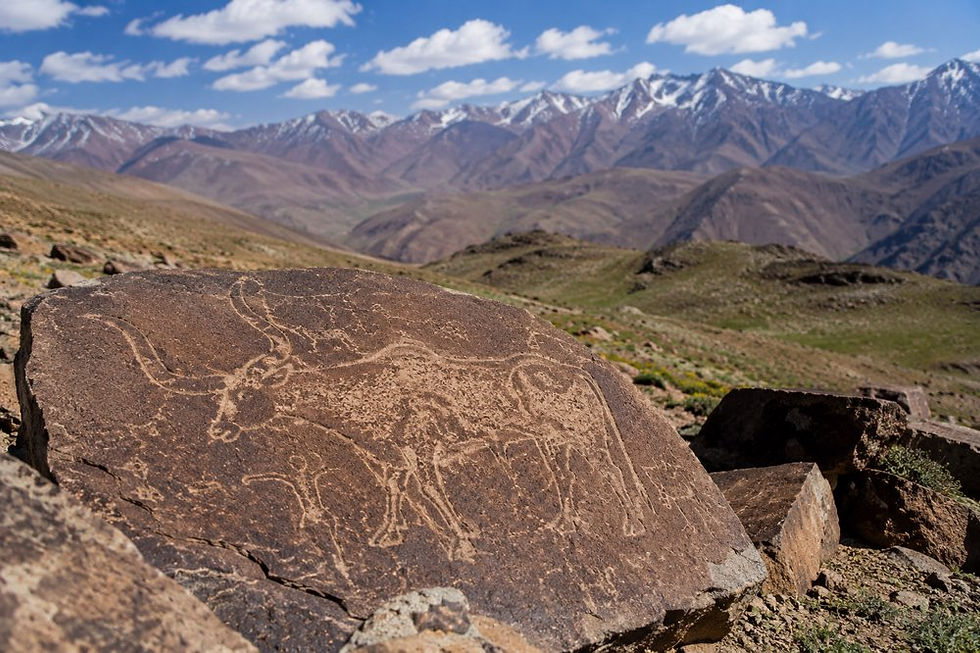
Hidden high in the High Atlas Mountains, the Oukaïmeden Rock Engravings are among Morocco's most remarkable archaeological treasures. While many visitors come to Oukaïmeden for skiing in winter or hiking in summer, few realize that this alpine plateau is home to more than a thousand prehistoric engravings dating back thousands of years. These ancient carvings provide an extraordinary glimpse into the lives of the first pastoral communities that once roamed the mountains, leaving behind a lasting record of their culture, beliefs, and relationship with nature.
If you're planning a trip to the High Atlas Mountains, exploring the Oukaïmeden Rock Engravings is an unforgettable experience that combines archaeology, history, and breathtaking mountain scenery.
Where Are the Oukaïmeden Rock Engravings?
The Oukaïmeden Rock Engravings are located on the Oukaïmeden Plateau, approximately 75 kilometres south of Marrakech, in the heart of Morocco's High Atlas Mountains. Sitting at an altitude of around 2,600 metres, Oukaïmeden is best known as Morocco's highest ski resort, but its archaeological importance is equally impressive.
Scattered across sandstone outcrops and rocky surfaces are more than 1,000 prehistoric engravings, making Oukaïmeden one of the richest concentrations of rock art in North Africa.
The plateau has long served as a natural crossroads for people moving between mountain valleys and high summer pastures. Thousands of years before modern roads existed, prehistoric communities travelled through these landscapes with their livestock, carving images into the rock that still survive today.
Today, visitors can hike across the plateau and discover these ancient artworks while enjoying spectacular views of the surrounding High Atlas peaks.
A Journey Back to Prehistoric Morocco
Long before the first cities appeared in Morocco, people were already living among the valleys and mountains of the High Atlas. During the Late Neolithic and Bronze Age, communities gradually shifted from a lifestyle based mainly on hunting to one centred on agriculture and animal husbandry.
This transformation changed almost every aspect of daily life.
People began polishing stone tools, producing pottery, domesticating animals, and moving seasonally with their herds between lowland villages and high mountain grazing areas. Archaeologists believe these pastoral communities created the engravings that we admire today.
Rather than writing with words, these early inhabitants recorded their world by carving animals, people, weapons, and mysterious symbols into the sandstone. Every engraving represents a silent testimony to life in Morocco thousands of years before written history.
The Discovery of the Oukaïmeden Rock Engravings
Although local Amazigh communities had known about these carvings for generations, archaeological interest began to grow during the twentieth century.
Researchers documented hundreds of engraved rocks across the plateau, carefully recording their location, style, and subject matter. As more surveys were carried out, the number of known engravings continued to increase, revealing Oukaïmeden as one of the most significant prehistoric rock art sites in Africa.
Today, archaeologists continue to study the engravings to better understand the people who created them, the changing climate of the High Atlas, and the evolution of early pastoral societies in North Africa.
How Old Are the Oukaïmeden Rock Engravings?
Dating rock engravings is challenging because stone cannot be dated directly like wood or charcoal.
Instead, archaeologists estimate the age of the carvings by comparing artistic styles, depicted objects, weathering patterns, and archaeological discoveries found nearby.
Most specialists agree that the majority of the engravings were created between 3000 BC and 1000 BC, although some may be older or slightly more recent.
This means that many of the carvings are over 4,000 years old, surviving through dramatic climatic changes, the rise and fall of civilizations, and countless generations of people who crossed these mountains.
Their remarkable preservation makes Oukaïmeden one of Morocco's most valuable prehistoric heritage sites.
Why Is Oukaïmeden So Important?
The importance of the Oukaïmeden Rock Engravings goes far beyond their artistic beauty.
They provide rare evidence of how prehistoric communities lived in the High Atlas Mountains long before written records existed. Through these carvings, archaeologists can learn about:
The animals that once inhabited Morocco.
The development of livestock breeding.
Ancient hunting practices.
Early metal weapons.
Religious or symbolic beliefs.
Seasonal movement between mountain pastures.
The changing environment of the High Atlas.
Together, these engravings form an open-air archive of Morocco's distant past.
Unlike museum collections displayed behind glass, these artworks remain exactly where prehistoric artists created them thousands of years ago, allowing visitors to experience history within its original landscape.
An Open-Air Museum Unlike Any Other
Walking through Oukaïmeden feels like stepping into one of the oldest art galleries in the world.
Instead of walls and exhibition rooms, the engravings are scattered across alpine meadows, rocky ridges, and mountain passes. Every carved stone tells a different story, while the surrounding landscape remains surprisingly similar to that experienced by the ancient pastoralists who once grazed their animals here.
This unique combination of archaeology and mountain scenery makes Oukaïmeden a destination unlike anywhere else in Morocco.
Whether you are passionate about history, photography, hiking, or Amazigh culture, the plateau offers an experience that connects visitors with more than four millennia of human history.
In the next section, we'll explore the different types of engravings found at Oukaïmeden, including the famous large-horned bovines, human figures, ancient weapons, and mysterious symbols that continue to fascinate archaeologists today.


Comments